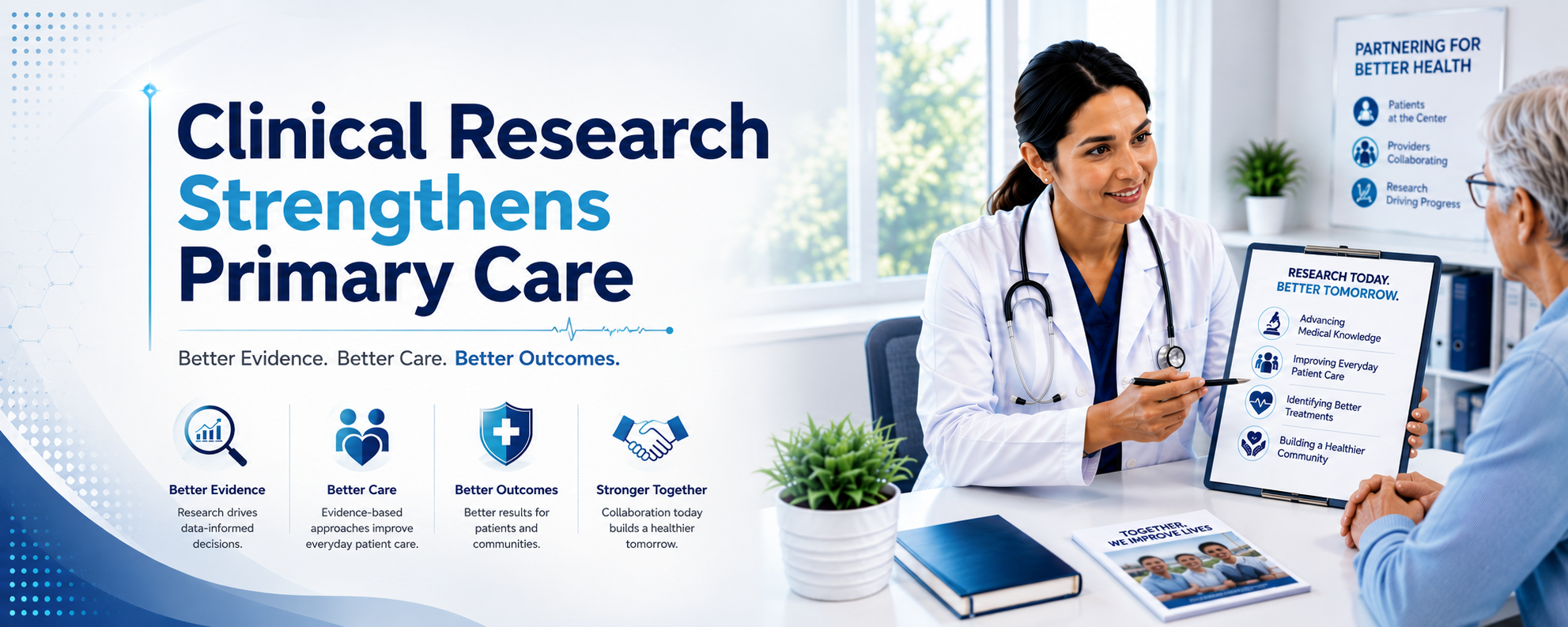
How Primary Care and Clinical Research Work Together — and Why That Benefits You
The best clinical research happens closest to where patients actually live — in community practices, not just academic towers. Here is why that matters for your health.
For much of the history of clinical research in the United States, the dominant model was academic: trials were designed at universities, conducted in hospital-based research centers, and populated with patients who were often atypical of the broader population — healthier, more educated, more urban, more likely to have robust insurance and transportation.
The result was a body of evidence that worked reasonably well for those patients — but often failed to account for how drugs actually perform in the real world, in patients managing multiple conditions simultaneously, with competing medications and the normal complexities of everyday life.
Community-based research, conducted at primary care-adjacent sites like Mission Research Institute, is correcting that blind spot.
The result was a body of evidence that worked reasonably well for those patients — but often failed to account for how drugs actually perform in the real world, in patients managing multiple conditions simultaneously, with competing medications and the normal complexities of everyday life.
Community-based research, conducted at primary care-adjacent sites like Mission Research Institute, is correcting that blind spot.
Why Primary Care Patients Represent the Real World
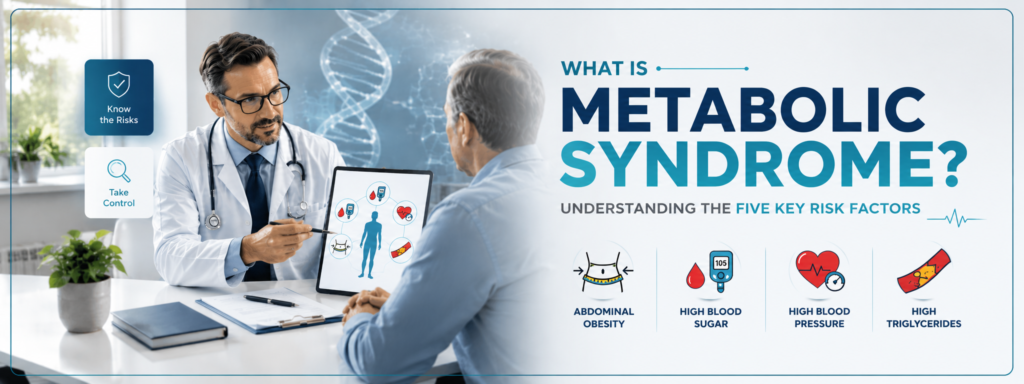
Primary care patients are not one-condition patients. They come in with five things at once: Type 2 diabetes managed on three medications, a blood pressure that has not reached target, triglycerides elevated from a diet they cannot quite get under control, a knee that is hurting, and a family history of heart disease they are quietly afraid of.
That complexity is real life. And clinical research needs real-life participants to generate evidence that actually applies to real-life practice. When a primary care physician and a clinical research site are aligned — sharing patient populations, values, and a commitment to community health — the research produced is more generalizable, more meaningful, and more applicable to the patients sitting in their offices.
That complexity is real life. And clinical research needs real-life participants to generate evidence that actually applies to real-life practice. When a primary care physician and a clinical research site are aligned — sharing patient populations, values, and a commitment to community health — the research produced is more generalizable, more meaningful, and more applicable to the patients sitting in their offices.
What the Relationship Between Primary Care and Research Looks Like in Practice
At Mission Research Institute, the relationship between clinical research and primary care is not incidental — it is foundational. Our research team operates within the same community that our affiliated primary care practice has served for over 25 years.
This means:
This means:
- Patients already have an established relationship with physicians who take their health history seriously
- Research coordinators understand the community's demographics, common conditions, and real barriers to participation (transportation, work schedules, childcare)
- Study physicians are not anonymous researchers — they are community physicians with accountability to the patients they see
- Findings from our trials feed directly back into how local physicians practice medicine
How Research Makes Your Primary Care Better
Clinical research does not just benefit the participants who enroll. It improves care for everyone — including the patients who never join a study — by generating the evidence that changes clinical guidelines. The American Diabetes Association’s standards of care, the ACC/AHA cardiovascular guidelines, the Endocrine Society’s obesity management recommendations: all of these are built from the results of clinical trials conducted in patients exactly like yours.
When your doctor adjusts your diabetes medication based on new evidence that it also reduces heart attack risk, that evidence came from a trial. When a new treatment is approved that allows your doctor to reduce your medication burden, that approval was built on the participation of thousands of volunteer patients across hundreds of research sites.
Every patient who participates in research contributes to the evidence that improves care for the millions who do not.
Every patient who participates in research contributes to the evidence that improves care for the millions who do not.
What We Believe About Research at Mission Research Institute
We believe that clinical research is not a separate category of medicine — it is medicine at its most rigorous. We believe that community patients deserve access to investigational treatments and the close monitoring that comes with participation. We believe that physician-led research, conducted with transparency and genuine care for every participant, produces the best science and the best patient experience.
And we believe that the East Valley — Gilbert, Chandler, Mesa, Tempe, and the communities around them — deserves a research site that reflects its values and serves its population.
And we believe that the East Valley — Gilbert, Chandler, Mesa, Tempe, and the communities around them — deserves a research site that reflects its values and serves its population.
The medicine your doctor will prescribe in five years is being shaped by the research happening right now. You have the opportunity to be part of that — and to benefit from it directly.
A Final Word for Patients Who Are Curious but Cautious
You do not have to be certain to make a phone call. You do not have to commit to anything to come in for a screening visit. Clinical research begins with a conversation — and at Mission Research Institute, that conversation is always on your terms, at your pace, with full transparency about what any study involves.
We are here. We are part of this community. And we would be glad to talk.