The Obesity Epidemic and the Science of What Actually Works
Obesity is not a willpower problem. It is a metabolic disease — and research is finally catching up with that reality
For decades, the medical advice given to people struggling with obesity was simple and frustrating: eat less and move more. While diet and exercise matter, that advice ignored something fundamental — obesity is not a failure of willpower. It is a chronic, complex metabolic disease with genetic, hormonal, environmental, and behavioral components.
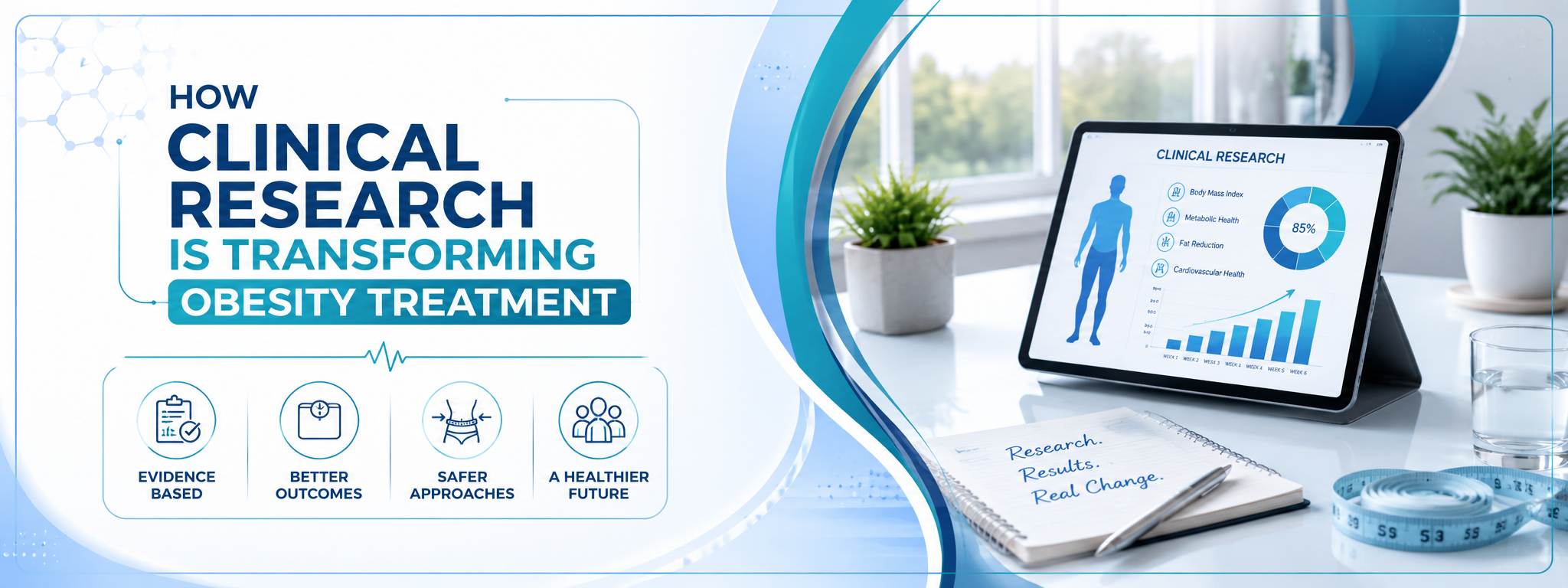
The good news is that medical research has dramatically shifted how obesity is understood and treated. New medications — particularly GLP-1 receptor agonists — have shown in clinical trials that significant, sustained weight loss is achievable with the right treatment. The research pipeline is now fuller than it has ever been.
Why Obesity Is a Medical Emergency — Not a Cosmetic Issue
Excess body weight is not simply an aesthetic concern. Obesity is a direct driver of:
- Type 2 diabetes — over 80% of people with Type 2 diabetes are overweight or obese
- Heart disease and stroke — the leading causes of death in the United States
- Non-alcoholic fatty liver disease (NAFLD/MASH) — now the most common liver disease in America
- Obstructive sleep apnea, osteoarthritis, and several types of cancer
- Chronic inflammation that damages blood vessels, organs, and metabolic function over time
42% of U.S. adults have obesity — yet fewer than 2% of eligible patients receive FDA-approved medical treatment for it.
What the Research Revolution in Obesity Treatment Looks Like
The class of medications known as GLP-1 receptor agonists — which includes drugs like semaglutide and tirzepatide — were first developed for Type 2 diabetes. Clinical trials revealed something remarkable: patients were losing significant amounts of weight. This discovery launched an entirely new field of obesity medicine research.
Current trials are going further. Researchers are studying:
Current trials are going further. Researchers are studying:
- Dual and triple hormone receptor agonists that target multiple metabolic pathways simultaneously
- Oral formulations that eliminate the need for weekly injections
- Combination strategies pairing medication with structured lifestyle coaching
- Long-term cardiovascular and liver-protective effects of weight loss medications
What an Obesity Research Study Involves
Obesity trials at community research sites like Mission Research Institute are designed for real working adults — not just hospital patients. Typical studies involve an initial screening visit, a baseline evaluation, and then regular check-ins spaced out over weeks or months.
Participants receive the investigational medication at no cost, along with regular weight checks, metabolic labs, and physician monitoring. Many studies include structured nutritional or lifestyle guidance as part of the protocol. Compensation is provided for each visit.
Participants receive the investigational medication at no cost, along with regular weight checks, metabolic labs, and physician monitoring. Many studies include structured nutritional or lifestyle guidance as part of the protocol. Compensation is provided for each visit.
A Different Kind of Weight Loss Support
One of the most meaningful benefits patients describe from obesity research participation is the support structure it provides. Regular visits, accountability to a clinical team, and access to a physician who takes your weight seriously as a medical problem — not a personal failing — can be genuinely transformative.
If you have tried and been frustrated by diet programs, calorie counting, or medications that did not work, a clinical trial may offer access to a class of treatment you could not otherwise afford or access.
If you have tried and been frustrated by diet programs, calorie counting, or medications that did not work, a clinical trial may offer access to a class of treatment you could not otherwise afford or access.
Obesity medicine has changed more in the last five years than in the previous fifty. The treatments being tested in trials today may become the standard of care your doctor prescribes tomorrow.